Why herbs are the most practical starting point
Most aromatic herbs come from the Mediterranean basin, where they evolved on rocky, well-drained slopes with six or more hours of sun and dry summers. That profile overlaps reasonably well with a south-facing Romanian balcony — especially in Bucharest, Constanța, and other lowland cities where summer temperatures routinely exceed 30°C. The same traits that make herbs drought-tolerant in the wild also make them forgiving of the intermittent watering that many apartment growers fall into.
What herbs cannot handle is waterlogged soil or a container with no drainage. That single factor — a hole at the bottom of the pot — explains more failed herb gardens than any other mistake.
Container selection and sizing
The minimum container depth for most herbs is 20 cm, and for rosemary and lavender you want 25–30 cm to allow a proper tap root to develop. Width matters less than depth, but individual pots of 15–20 cm diameter are easier to manage than long troughs when you want to move plants indoors for winter.
Terracotta breathes better than plastic, reducing the risk of root rot in overwatered plants — but it also dries out faster during summer heat, which can stress basil in particular. A glazed ceramic or plastic pot in a light colour (which reflects heat) is a reasonable compromise for a west-facing balcony where afternoon sun is intense.
Recommended container materials
- Terracotta: Best airflow, highest risk of drying out in hot weather. Good for rosemary and thyme.
- Plastic: Retains moisture longer. Suitable for basil and mint, which need consistent hydration.
- Glazed ceramic: Middle ground. Works for parsley and chives.
- Fabric grow bags: Air-prunes roots and prevents compaction. Effective for large perennial herbs.
Soil preparation
Garden soil is too heavy for containers — it compacts over time and reduces drainage. A purpose-made potting substrate with peat or coco peat, compost, and coarse perlite (roughly 60/20/20) gives herbs the loose, well-aerated environment they need. Add a 3–4 cm layer of gravel or clay pebbles at the base before filling to prevent the drainage hole from blocking.
Avoid fertiliser-heavy "universal" mixes if you're growing culinary herbs. High nitrogen content encourages rapid leaf growth with less flavour concentration. A leaner mix produces slower growth but far more aromatic leaves.

Variety notes for the most common balcony herbs
Basil (Ocimum basilicum)
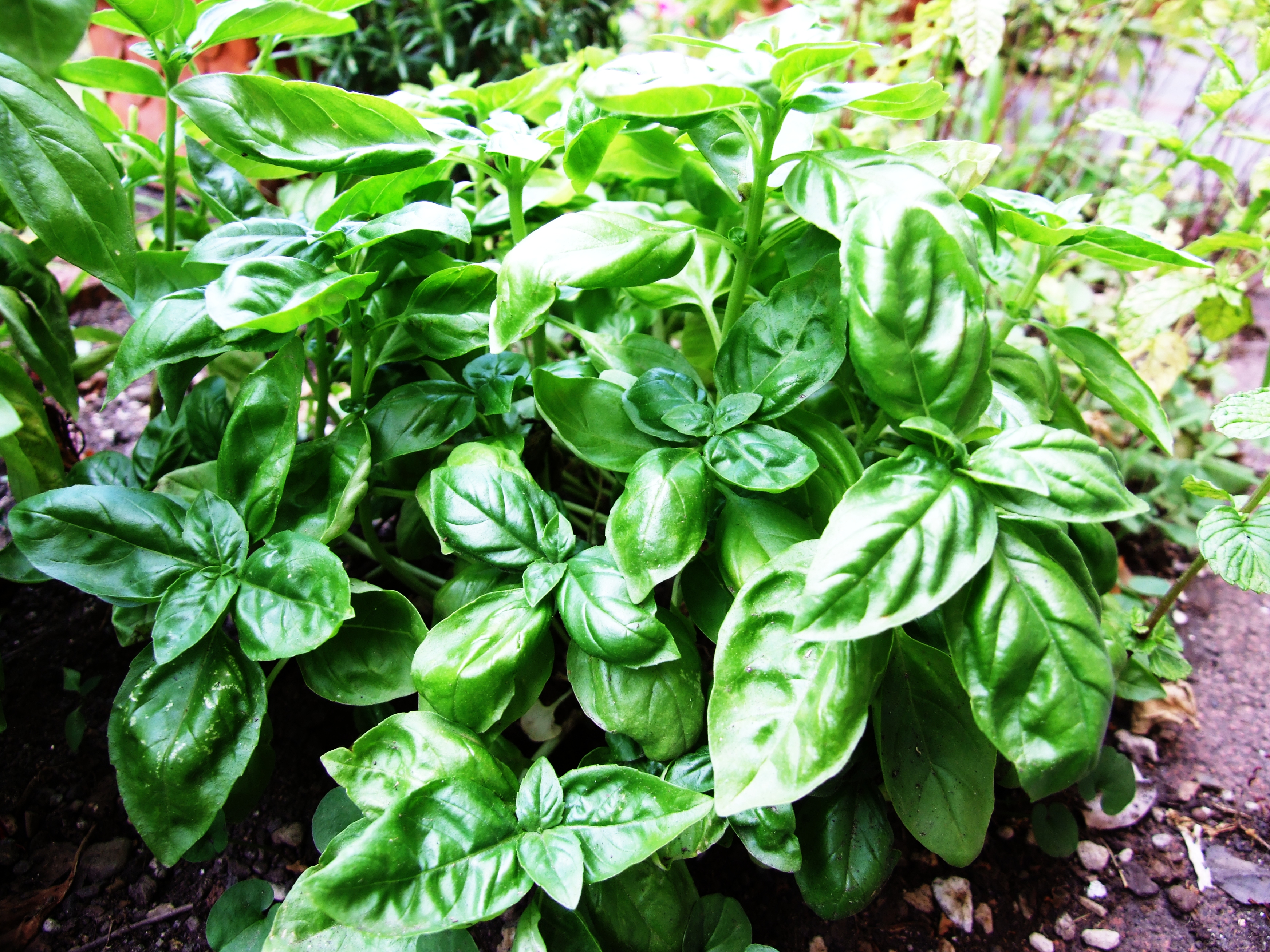
Basil is one of the few annual herbs that genuinely needs warmth — do not put it outside until night temperatures are consistently above 12°C, which in Bucharest means late April at the earliest, and in Cluj or Sibiu closer to mid-May. 'Genovese' is the standard large-leaf variety for cooking. 'Piccolo' produces smaller, more pungent leaves and handles container life well. 'Purple Ruffles' is worth growing for its visual interest alongside standard green.
Pinch flower buds as soon as they appear. Once basil flowers, leaf production slows and flavour drops noticeably. A pot with three to four plants, harvested regularly from the top, can supply a household through most of summer.
Thyme (Thymus vulgaris)
Thyme is genuinely undemanding. It tolerates poor soil, drought, and the reflected heat of a concrete balcony floor in a way that basil cannot. Common thyme flowers in June — the flowers are edible and mildly flavoured. Lemon thyme (T. citriodorus) offers a citrus note useful in fish dishes. Both overwinter well if given minimal water through the cold months and protection from sustained hard frost.
Rosemary (Salvia rosmarinus)
Rosemary develops into a woody shrub over several years and will eventually need a 30 cm or larger container. In Romania, it can overwinter outdoors in sheltered spots in Bucharest and the south, but in Transylvania it is safer to bring it inside for December to February. The 'Prostratus' variety has a trailing habit well-suited to balcony edges; upright 'Tuscan Blue' produces strong flavour and is more cold-hardy.
Mint (Mentha spp.)
Mint is aggressive — it will take over a shared container and exhaust the soil in one season. Always grow it in a separate pot. Spearmint (M. spicata) and peppermint (M. × piperita) are the most useful for cooking and teas. Chocolate mint has a distinct aroma but the same invasive growth habit. Keep mint consistently moist and cut it back by half when it starts to get leggy, which stimulates dense regrowth.
Parsley (Petroselinum crispum)
Parsley is biennial — it produces leaves in its first year and flowers in its second, after which the leaves turn bitter. Most balcony growers treat it as annual, sowing fresh seed each spring. Flat-leaf ('Italian') parsley is more flavourful than curly for cooking; curly is more ornamental. Germination is slow (two to four weeks) — soaking seed in warm water for 24 hours before sowing speeds it up.

Watering and feeding
The most practical watering rule for herbs is to check the top 2–3 cm of soil before watering. If it is still moist, wait. If it is dry to that depth, water thoroughly until it drains from the base. In July and August, that can mean daily watering for basil and parsley; rosemary and thyme may need water only every two to three days.
Water in the morning or evening when temperatures are lower — midday watering on a hot balcony evaporates before reaching roots and can scorch wet leaves. Apply water at the base of the plant, not over the foliage, to reduce fungal risk.
Herbs do not need heavy feeding. A diluted liquid organic fertiliser every three to four weeks during the growing season is sufficient. Seaweed extract or compost tea supports growth without the nitrogen surge that reduces flavour.
Overwintering
Perennial herbs — thyme, rosemary, sage, lavender — can survive Romanian winters if protected from sustained hard frost and kept dry at the roots. The main risk is not temperature alone but the freeze-thaw cycle that heaves roots out of soil and cracks terracotta. Moving containers against an insulated wall and covering the base with horticultural fleece helps significantly.
Annual herbs (basil, summer savory, dill, coriander) do not overwinter and should be composted or used fully before the first frost. Parsley may survive a mild winter under cover but is better replaced each spring.

